
Learn to Build your own Solar Generator
It is a hot summer afternoon (or worse yet, a brutally cold winter’s morning). The power goes out. It may be only for an hour. It may be down for days. What are your options?
The electrical grid in our nation is in pretty rough shape. Power outages are becoming more and more common. Each day (on average) 500,000 Americans loose electrical service for 2 hours. As a result, many people are investing hundreds and even thousands of dollars in gasoline or diesel generators. The power goes down – and the neighborhood suddenly sounds like a lawnmower. Loud and smelly generators come to life. There is a better option, however.
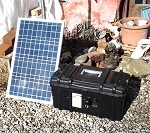
The solar panel charges a battery bank within the generator. When the grid goes down, simply plug your appliance into the outlet on the side of the generator and it will run, quietly, with no fumes, while the grid is down. If the sun is shining, you can recharge your batteries using the solar panel as you are using the generator. Keep the generator in your home if you would like, with the panel outside (no noise or fumes, remember?)

Use your generator to…
- run your furnace fan and thermostat – giving you whole-house gas heat even when there is no electricity
- connect to your refrigerator and/or freezer to keep your food from spoiling.
- plug in a power strip and power lights, your computer, your television or whatever you wish to stay just a bit more comfortable during an extended outage
- or use the generator for camping (even at sites that prohibit generators, as this one makes no noise and does not burn fossil fuels)
If you search online, you will find them ranging in price from $600 (for small units) to several thousand dollars for larger units. We will teach you how to make your own generator for a fraction of the cost (from as low as $250).
You will learn…
- how these things work
- how to select the various components used in a solar generator
- where to find inexpensive parts
- how to size the array and battery bank to meet your specific needs
- how to determine just how much power you need to handle the tasks you envision (like running your gas-powered furnace)
- how to size, connect and place the wires that hook everything together
- how to test, troubleshoot and maintain your solar generator
Three ways to make it happen…
Option 1: Do it by the book
We offer a comprehensive 120-page book with detailed drawings, sizing charts, typical use sizing guidelines – basically everything you need to design and build your own generator. Choose either a paper or electronic version of the guide.
Option 2: Online Short Course
Learn more about or register for our online course…
Option 3: Face-to-face Classes
Join us for an afternoon and learn how you can build your own solar generator. Harness the clean energy of the sun and power your critical loads in quiet comfort. Here is how it works…
Small Groups: This is a definite “hands-on” experience. In order that everyone gets ample change to participate, class size will be limited to 15 students.
2022 Dates Include:
February 26th, 2022
Learn to Build your own Solar Generator
Lyndhurst Community Presbyterian Church, Lyndhurst Ohio
$65 (includes course, detailed plans, Assembling a Solar Generator book)